Key takeaways
- Consistent torque is vital for preventing loose or excessively tightened screw caps in high-speed production lines.
- A reliable Bottle Capping Machine ensures stable bottle positioning and controlled cap engagement during capping cycles.
- Cap feeding and orientation systems contribute significantly to torque consistency in automated screw capping operations.
- Before selecting a Bottle Capping Machine Manufacturer in India, evaluate closure compatibility and bottle characteristics.
- Understanding production variables helps maintain screw cap quality and consistency during high-speed applications.
Liquido is a leading Bottle Capping Machine Manufacturer in India providing automated capping solutions for screw caps and industrial bottle-packaging applications.
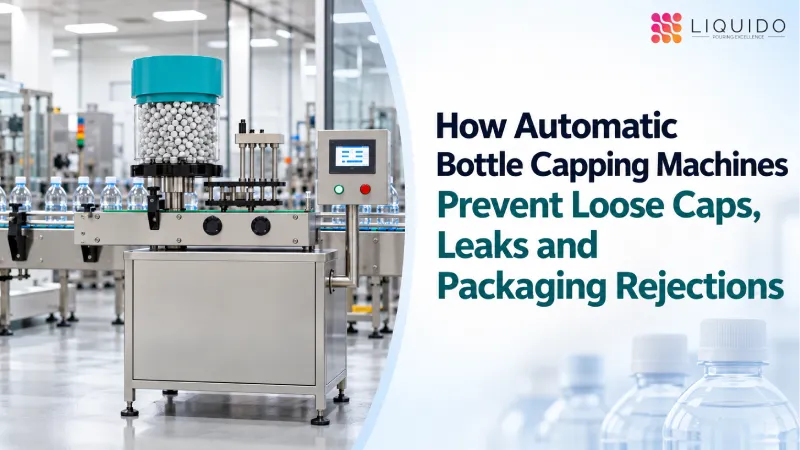
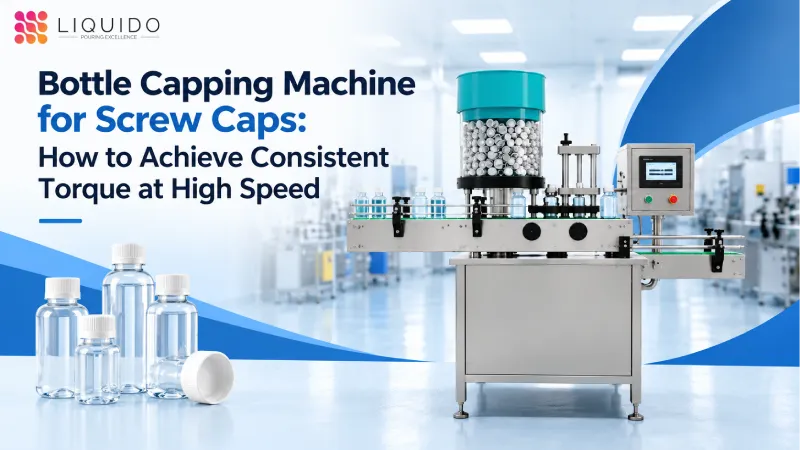
Increasing capping speed is valuable only when every screw cap is applied with controlled and repeatable tightening force. A poorly adjusted Bottle Capping Machine can lead to loose caps, excessive tightening, damaged closures or inconsistent finished packs. For B2B manufacturers, the goal is therefore not simply faster capping, but stable torque while bottles continue moving efficiently through the production line.
Why Screw Cap Torque Needs to Remain Consistent
Screw caps depend on rotational force to engage correctly with the bottle thread. If that force varies significantly from one bottle to another, closure quality can also vary.
Insufficient torque may leave the closure loose, while excessive torque can place unnecessary stress on the cap, thread or container. At higher production speeds, repeating the correct tightening action becomes even more important because small process variations can affect many bottles.
Consistent torque means applying suitable and repeatable tightening force rather than simply tightening every cap as firmly as possible.
A professional Bottle Capping Machine Manufacturer therefore needs to consider the closure design, bottle stability, capping mechanism and production requirement as connected parts of one process.
How Automatic Torque Control Supports High-Speed Capping
Modern automatic capping systems can use servo-based or controlled-torque mechanisms to manage the tightening action. Instead of depending on manual operator judgement, the machine performs the capping cycle according to the selected operating setup.
With a properly configured Bottle Capping Machine, the process typically follows these stages:
- Bottles enter the capping section through the conveyor.
- Caps are fed and oriented for application.
- The bottle is positioned and stabilized.
- The capping head engages the screw cap.
- Controlled rotational force tightens the closure.
- The finished bottle exits toward the next packaging operation.
This repeatable sequence supports consistent closure application even when production is running continuously.
Bottle Stability Is Critical at Higher Speeds
Torque control alone cannot compensate for an unstable bottle. When containers shift, rotate or tilt while the capping head engages the closure, the cap may not seat correctly.
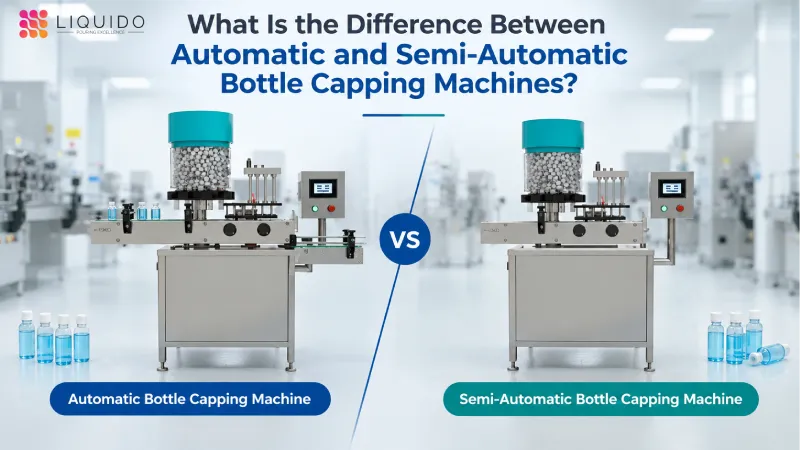
Bottle guides, holding arrangements and conveyor synchronization therefore play an important role in high-speed capping. Our fully automatic systems can incorporate conveyor synchronization and anti-scratch bottle holding to support controlled handling during the capping cycle.
At Liquido, our approach is to consider both the closure and the container because stable bottle positioning supports accurate cap engagement before torque is applied.
Cap Feeding and Orientation Affect Torque Consistency
For automated screw capping, the cap must reach the bottle in the correct orientation. Incorrect presentation can cause tilted caps, incomplete engagement or failed capping cycles before torque control even becomes relevant.
Automatic systems may use cap feeders with orientation mechanisms to deliver closures consistently to the capping section. Cap-presence monitoring can also help identify situations where a closure is missing.
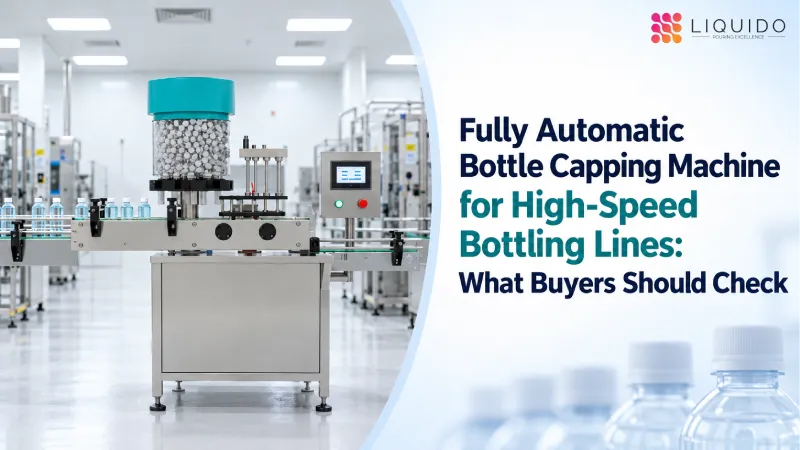
When evaluating a Bottle Capping Machine Manufacturer in India, buyers should therefore examine more than the capping head itself. Cap feeding, bottle handling and line synchronization all contribute to repeatable operation.
What Causes Torque Variation in Screw Capping?
Several production variables can influence how consistently a screw cap is applied. Understanding them helps production teams identify whether adjustments are needed in the closure, bottle or machine setup.
Common factors include:
- Variation in bottle or neck dimensions
- Differences in cap dimensions or thread condition
- Incorrect torque settings
- Unstable bottles during cap engagement
- Poorly oriented caps
- Worn or incorrectly adjusted capping components
- Changes in production speed without corresponding setup adjustments
A capable Bottle Capping Machine Manufacturer should evaluate these application-specific factors rather than treating every screw-cap requirement as identical.
High Speed vs Controlled Capping
High output and reliable closure application should work together rather than compete with one another.
| Production Factor | Poorly Controlled Capping | Controlled Automatic Capping |
|---|---|---|
| Cap tightening | Variable | Repeatable torque control |
| Bottle handling | Can become unstable | Guided and synchronized |
| Cap presentation | Greater dependence on manual handling | Automated feeding possible |
| Continuous production | More operator-dependent | Designed for inline operation |
| Closure consistency | More variable | More controlled |
The correct Bottle Capping Machine configuration should match the required production speed without compromising the stability needed for proper screw-cap engagement.
What Buyers Should Check Before Selecting a Screw Capper
Machine selection should begin with the actual bottle and closure rather than with speed alone. Production teams should verify the complete application before finalizing the configuration.
- Bottle material such as PET, HDPE or glass
- Bottle shape, height and neck dimensions
- Screw-cap size and thread design
- Required tightening torque
- Expected production speed
- Bottle stability at the required line speed
- Cap feeding and orientation requirements
As a Bottle Capping Machine Manufacturer in India, Liquido develops automatic capping solutions for round, square and custom bottle formats and supports screw caps along with other closure configurations.
Why Machine and Conveyor Synchronization Matters
High-speed packaging lines involve several operations working continuously. If the filling machine supplies bottles faster than the capping section can handle them, or if capped bottles cannot exit smoothly, production flow can become unstable.
Conveyor synchronization helps coordinate bottle movement through the capping zone. A qualified Bottle Capping Machine Manufacturer should therefore consider upstream and downstream equipment when configuring a high-speed system.
Reliable screw capping depends on coordinated bottle movement, correct cap presentation and controlled tightening working together.
Why Choose Us
At Liquido, we manufacture capping solutions with a focus on controlled closure application, bottle stability and integration with automated packaging lines. Our fully automatic systems can incorporate servo-based torque control, automated cap feeding, conveyor synchronization and no-cap/no-capping functionality. We work with PET, HDPE, glass and other container requirements while considering cap type, bottle geometry and desired production output. Our team evaluates the complete application before recommending a suitable capping configuration for continuous production.
Conclusion
Achieving consistent screw-cap torque at high speed requires more than increasing machine speed. Bottle positioning, cap orientation, torque control, conveyor synchronization and closure compatibility must work as one coordinated process. Choosing an experienced Bottle Capping Machine Manufacturer in India helps B2B buyers evaluate these factors around their actual packaging requirements. A properly selected system can support repeatable tightening, reduce loose or excessively tightened closures and create a more stable packaging operation. For high-volume manufacturing, the right capping setup provides the balance between production speed and consistent screw-cap application.
Need a high-speed screw-cap capping solution designed around your bottles, closures and production requirements? Contact Liquido to discuss your application with our team and identify a suitable automatic capping configuration.
Call: +91 98000 05293
Email: info@liquidofill.com
Talk to our team today about upgrading your screw-cap packaging line with controlled, high-speed capping automation.
Need help choosing the right machine?
Talk to our engineers for a configuration matched to your product and line.
Frequently asked questions
Several production variables can influence screw cap torque consistency, including variation in bottle or neck dimensions, differences in cap dimensions, incorrect torque settings, and unstable bottles during cap engagement. Proper evaluation of these factors by a qualified Bottle Capping Machine Manufacturer can help achieve optimal results.
A Bottle Capping Machine uses controlled-torque mechanisms and automated processes to apply consistent tightening force. This ensures that every cap is applied with the same torque, minimizing the risk of loose or overly tightened closures.
Bottle stability is crucial because unstable bottles can lead to improper cap engagement, resulting in quality issues. Incorporating bottle guides and conveyor synchronization helps maintain accurate bottle positioning during the capping process.
Buyers should evaluate the complete application requirements before selecting a manufacturer. Key factors include bottle material, shape, screw-cap size, required tightening torque, expected production speed, and cap feeding mechanisms.
Torque control ensures that each screw cap is tightened appropriately without exceeding the design limits of the closure or container. This leads to a more reliable sealing process and enhances the overall quality of the packaged product.